Pick your Poison
I cringe when I see “lawn treatment” trucks in our neighborhood. While decorated with images of turtles and frogs and butterflies, they spray chemicals that’ll kill all of those creatures should they crawl, hop, or alight on the lawn being “treated.” Heck, they even put up warning signs that say so after they’re done spraying. I’m not fond of pest control, either, but as our troubles with termites proved, it’s a necessary evil for homeowners.
The perfect green lawn should be a thing of the past.
Unlike many of our neighbors, ours isn’t. We didn’t do anything special other than leave it alone, free of chemical applications.
Of course the roots of the St. Augustine grass planted by our predecessors on this lot get nibbled by grubs and cinch bugs, but our lawn crew takes care of the problem. Almost daily, flocks of ibis wheel in and pick their way across both the front and back yard, feasting on problem insects. I note with some satisfaction that they don’t land on our neighbors’ perfect lawns. Perhaps they know walking on grass that shade of green isn’t good for them.
This past week, we swept through Broward and Palm Beach counties on my continuing effort to complete one final hiking guide: a re-imagined new edition of my two-decades-old Hiker’s Guide to the Sunshine State. I recruited Chris Stevens to co-author with me, since Florida’s a big state for one person to cover. And in fact, we have our spouses actively supporting our research trips because yes, we do hike the trails we write about.
I was largely revisiting places I’d written about for the original edition and an even earlier book, 50 Hikes in South Florida. Many of these public lands were acquired in the mid-to-late 90s, so on my initial visits they were still suffering from an overabundance of invasive plants. Now, most of them are lush green islands of wild amid a grid of urban, havens for wildlife and reminders of a South Florida lost to the “drain the swamps” efforts of over a century ago.
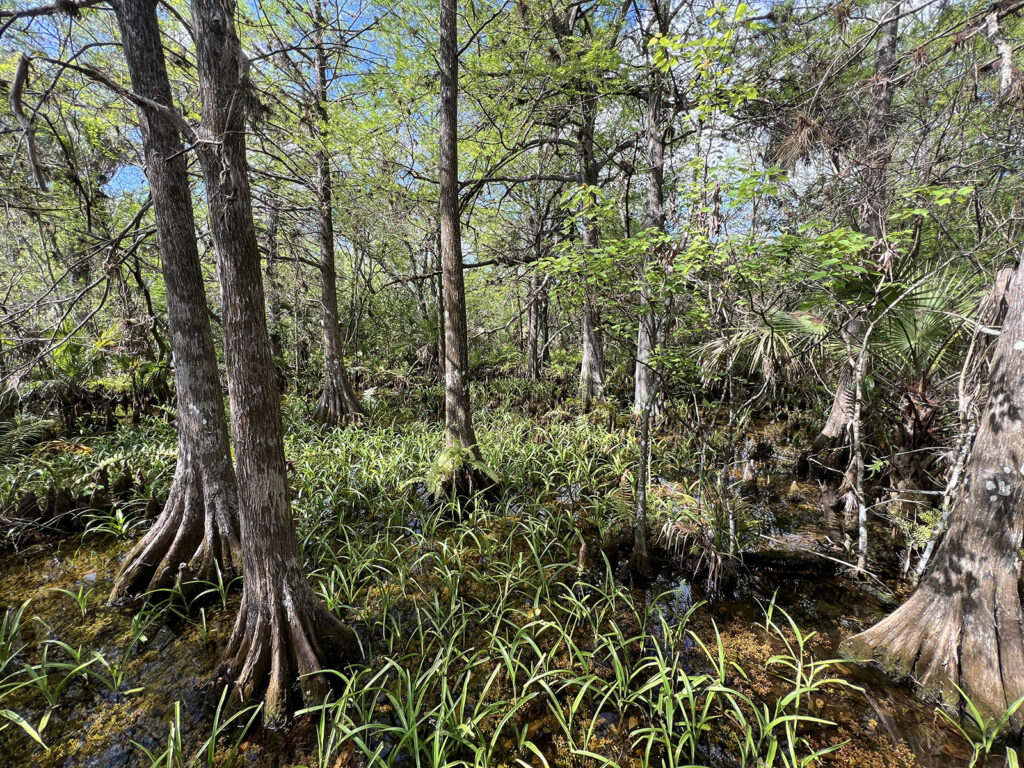
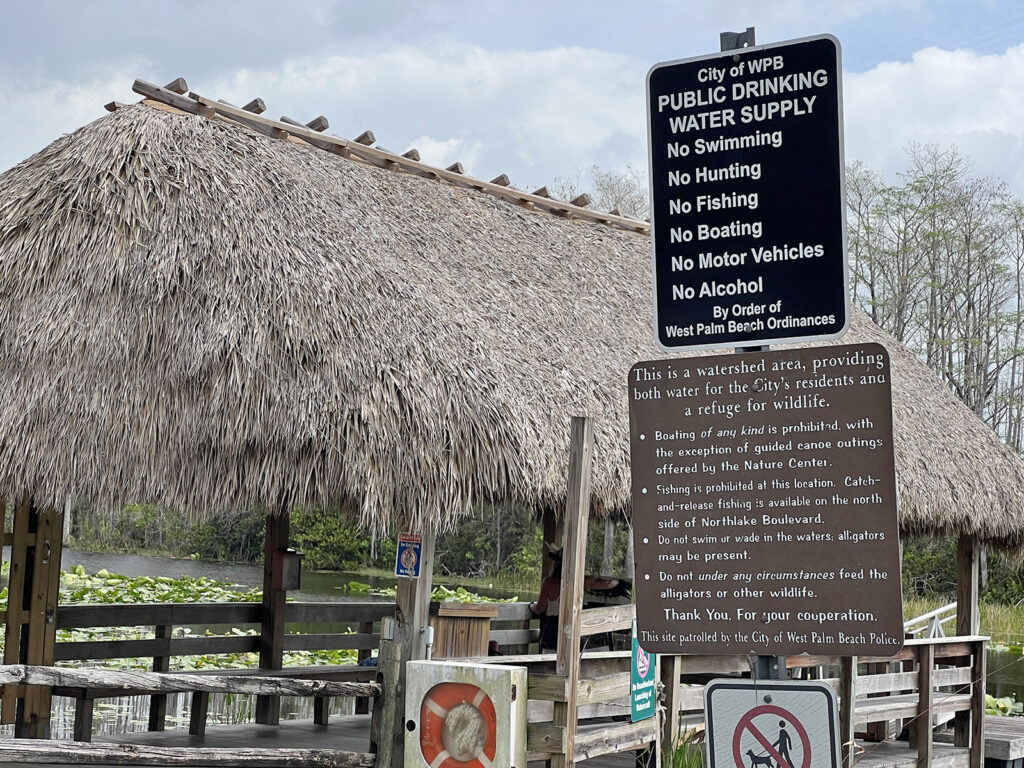
Along with Miami-Dade and southern Martin, this string of southeast Florida counties was once largely blanketed by the Everglades. Ironically, what remains of that massive swamp now serves as an urban water supply. In Broward and part of Palm Beach County, water is drawn from the Everglades, separated from the bustle of commerce, highways, and the spill of residences by levees. West Palm Beach relies on a precious 20-square-mile patch of Everglades protected as Grassy Waters Preserve, one of my destinations on this trip.
Since this is the Everglades, natural landscapes are seasonally wet. Walking in water is a norm, especially on any non-boardwalk trails west of the Florida Turnpike. So to revisit during the dry season meant I could put on a faster pace through Royal Palm Beach Pines. My loop hike would take close to two hours while John waited for me at the trailhead. It looked and felt like rain. I didn’t plan to dawdle.
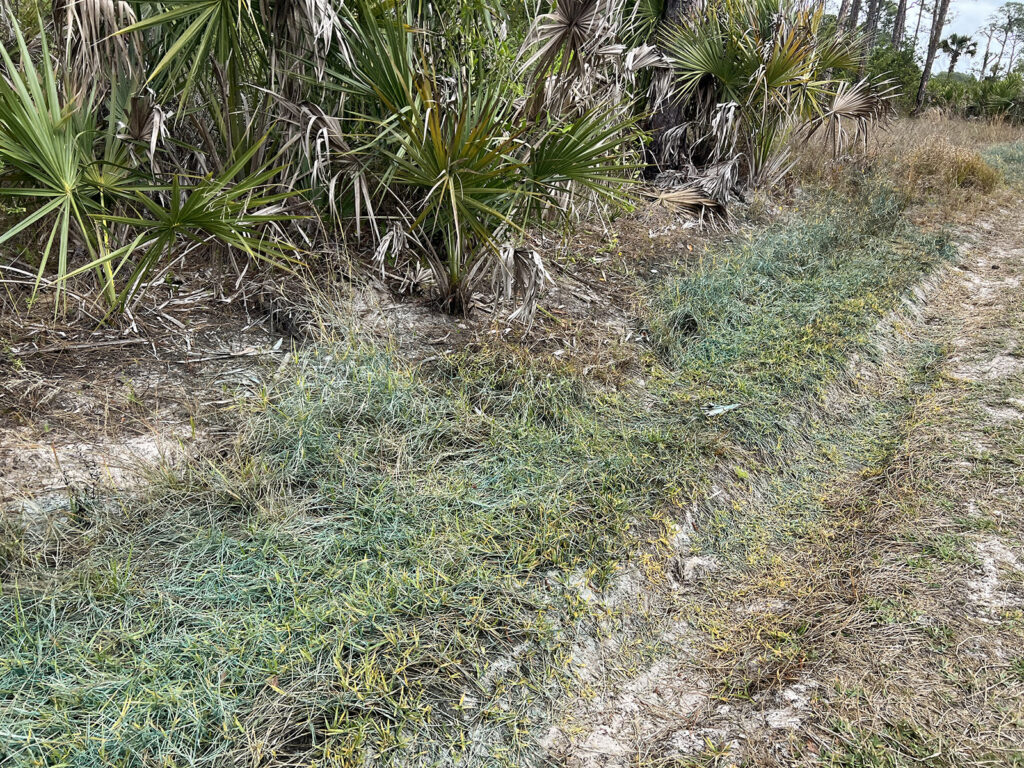
When I saw the first oddly colored patch of grass on the Pine Lily Trail, I thought “I wonder why they’re spraying grass seed?” After all, that’s what we see done along highways and newly-laid concrete paths in parks. This trail was nothing more than a blazed forest road.
And then I saw more. And more. When my sinuses started burning I knew I was in a fix. More than halfway through my hike, it didn’t make sense to turn back. I rummaged through my pack and came up empty on a mask, so I untied my bandana and held it to my nose every time I walked by a patch of eerie teal.
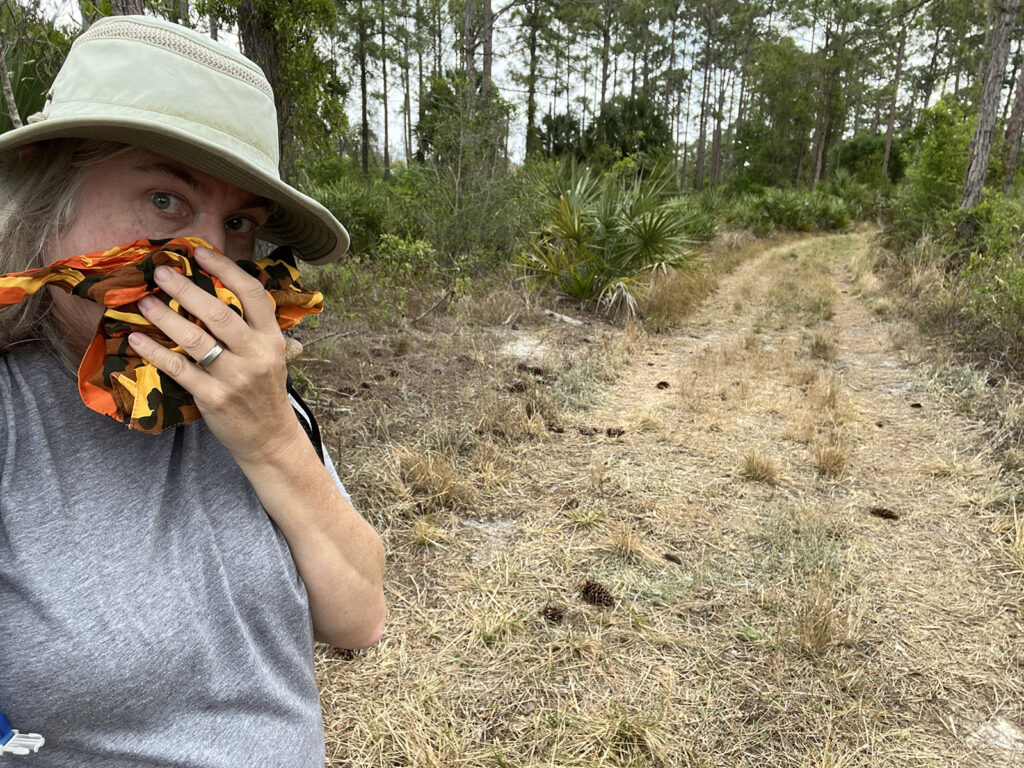
I’m allergic to Roundup, you see. Not a recent allergy, but definitely hyped up these days.
I’d ended up hospitalized thirty years ago after planting tulip bulbs in a flower bed. I didn’t know my then-spouse had sprayed my ready-to-plant flower bed with Roundup. My hands and lower arms blew up like they would burst. I couldn’t tell you now what the doctors did then to ease the swelling. True, they’ve changed the formulation of it since. Ironically, I’m allergic to yet another ingredient used in the chemical stew: tallow. Beef fat.
By the time I saw the pickup truck ahead of me with its bed full of canisters and spray bottles, my sinuses were going nuts and I felt a bit faint.
I gave the truck a wide berth and yelled out to its sole occupant, “Is that Roundup?”
Behind the wheel, eating his lunch, he nodded. I yelled back: “I don’t know why you’re using it on a trail, but I’m allergic to it!”
I rushed by quickly. Quickly enough and upset enough to miss my turn. I had to backtrack a quarter mile to my loop. Meanwhile, he passed me and left through a back gate. Since nothing was posted at the trailhead as a warning about chemicals being used in the preserve, I thought good. Maybe he left because of me.
But no. I saw more of it. And more. He left because he’d sprayed the whole damn loop. Even in front of the water source for equestrians.
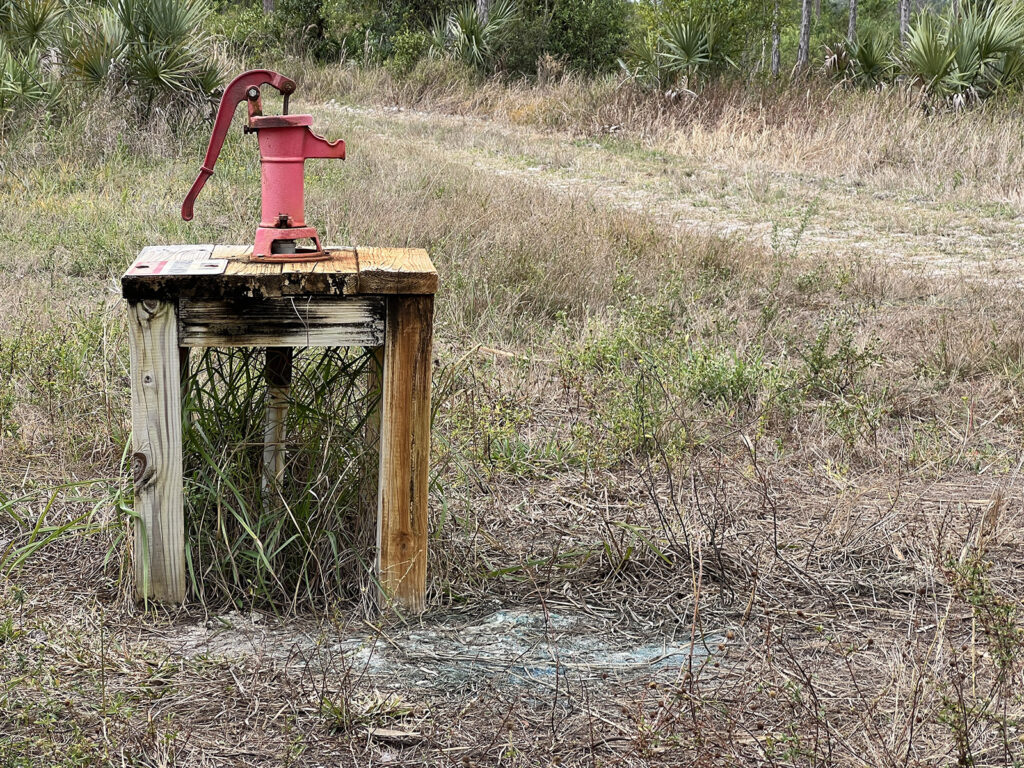
With this normally soggy landscape so dry, the fact these chemicals were actively percolating into the water supply didn’t hit me until that moment. It’s shameful enough that the square mileage of suburbia surrounding this 772 acre preserve gets soaked with “lawn treatments” and Roundup, but to use it IN a natural area?
Sacrilege.
It’s no wonder I saw no wildlife in this preserve. None. Not even a single bird. Today, unlike me, they had the sense to leave. Twenty-plus years ago, I encountered many species of birds along this loop as well as a few white-tailed deer.
Herbicides are poisons. They shouldn’t be used on public lands just because it’s easy to contract out the effort. (Looking at you, FWC and what’s happened to Lake Okeechobee). Manually remove invasive plants. Led by experts, crews of volunteers do so across Florida at many parks and preserves.
My hike that day was followed by a mad rush back to the hotel to flush my sinuses with a neti pot. Hydrating heavily afterwards, I felt better the next day.
We continued on to Grassy Waters Preserve, where I dashed ahead of some school groups to revisit the Cypress Boardwalk. Not far from where I left John by that sign about protecting the water supply, what do I see?
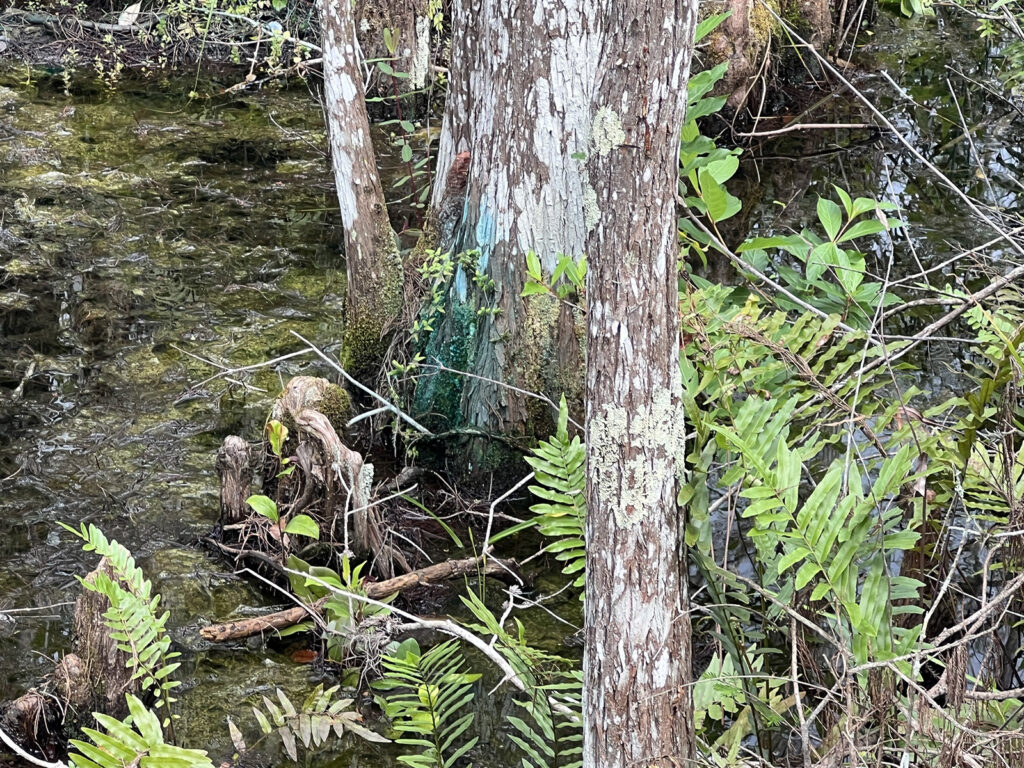
That tell-tale teal smudge I will forevermore associate with Roundup used where it shouldn’t be, in natural habitats. Sprayed on a tree near water level to fight an invasive fern.
Over the PUBLIC DRINKING WATER SUPPLY.