You’re History
Nine years ago, Mom passed. Dad already had. I sorted through family papers. Correspondence. Legal documents. Old pay stubs. School papers. Report cards. Childhood art projects. Photographs dating back more than a hundred years. I’ve yet to make a thorough assessment, but the gems I’ve gleaned so far have set me off on new avenues of research I couldn’t have imagined a decade ago.
After two seasons of road trips and lots of museum exhibits, I’ve stepped a little closer to understanding the grandfathers I never knew. I only have a memory of one, in a lush backyard at an outdoor wedding. Mom scooped me up and hurried me away from the man who introduced himself to toddler me as my grandfather. She didn’t admit her estrangement from him until I was a teen; he’d left grandma when Mom was a toddler. Now I know why: I’ve read his letters.
He held a great deal of anger towards his father-in-law over his inability to keep a job. My great-grandfather served in World War I. Was he exposed to poisonous gases that messed with his head? Or did the trauma of war hobble him for the rest of his shortened life?
No matter. It’s the irony, in my writer’s eye, that sticks: my exempt-from-service grandfather (he worked at a defense plant) breaking apart his family during WWII over the lasting effects of WWI trauma on my great-grandfather.
Dad’s father died when he was a teen. A big blue bell-shaped glass paperweight from Bell Telephone sat on Dad’s dresser, a reminder of his father. Now I know it likely sat on his father’s corporate desk the day Harry Truman gave his farewell speech as president, the day my grandfather died at that desk from a heart attack.
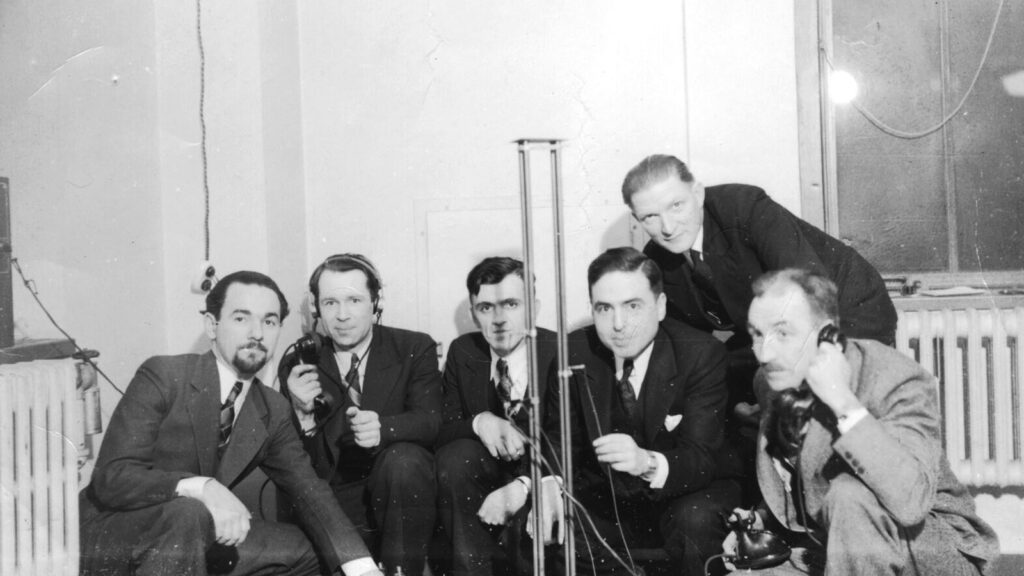
To memorialize the grandfather I never knew, I made a donation to the Harry S. Truman Presidential Library and Museum for a commemorative paving stone. If you visit, look for my last name and the words “Listen and learn.” Both my grandfather and his Uncle Harold, my great-grandmother’s brother, were amateur radio operators. After a discussion with a Signal Corps historian last year, I’m more convinced than ever that Grandpa monitored wartime airwaves for German activity on their behalf.
Sitting on a shelf above that bright blue paperweight that Dad always kept in a prominent spot was a very old photo album he’d never shown me. I cracked it open, and it cracked open a new world. On the opening page: Roosevelt Field, 1930.
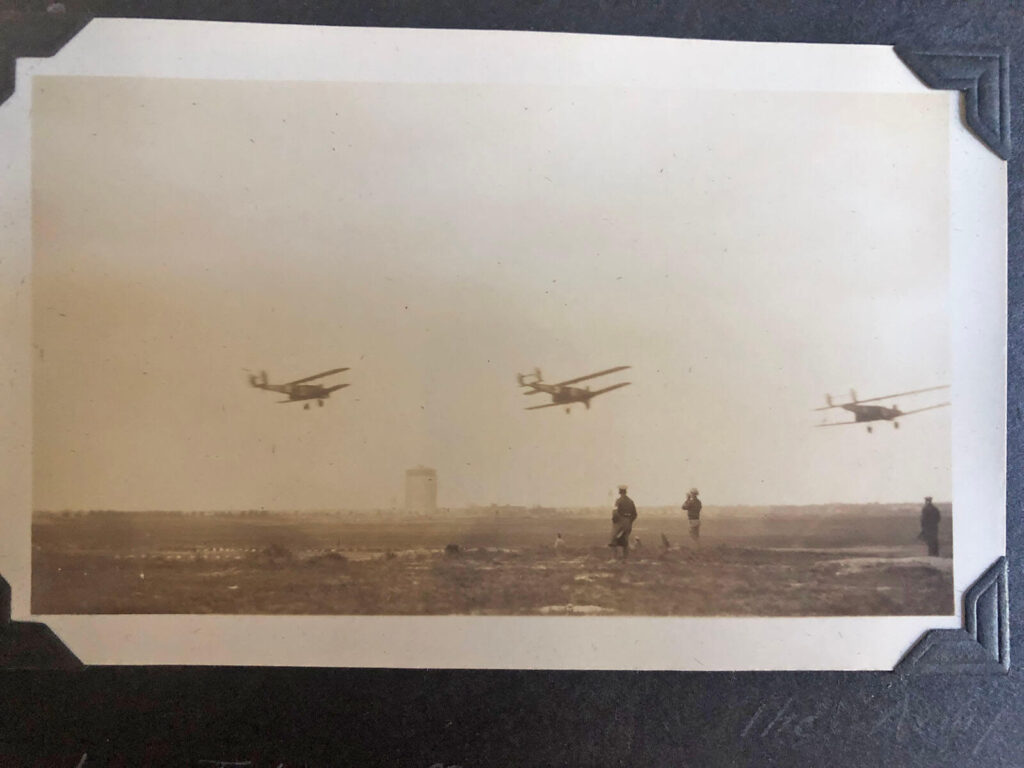
My aunt’s always lived not far from a shopping mall by that name, but here were aircraft. Notably, in neat annotations, my grandpa had documented the arrival of the Southern Cross. Down the rabbit hole I went, succeeding with the help of the New York Times “Wayback Machine” to find their edition for that day documenting the first west-to-east round-the-world flight. An Australian feat.
Next page, more aircraft and a flight instructor. Aerial photos over Long Island from a biplane. My grandfather went up? And I’ll be damned, there’s a woman next to him in the plane that looks like early photos of his sister.
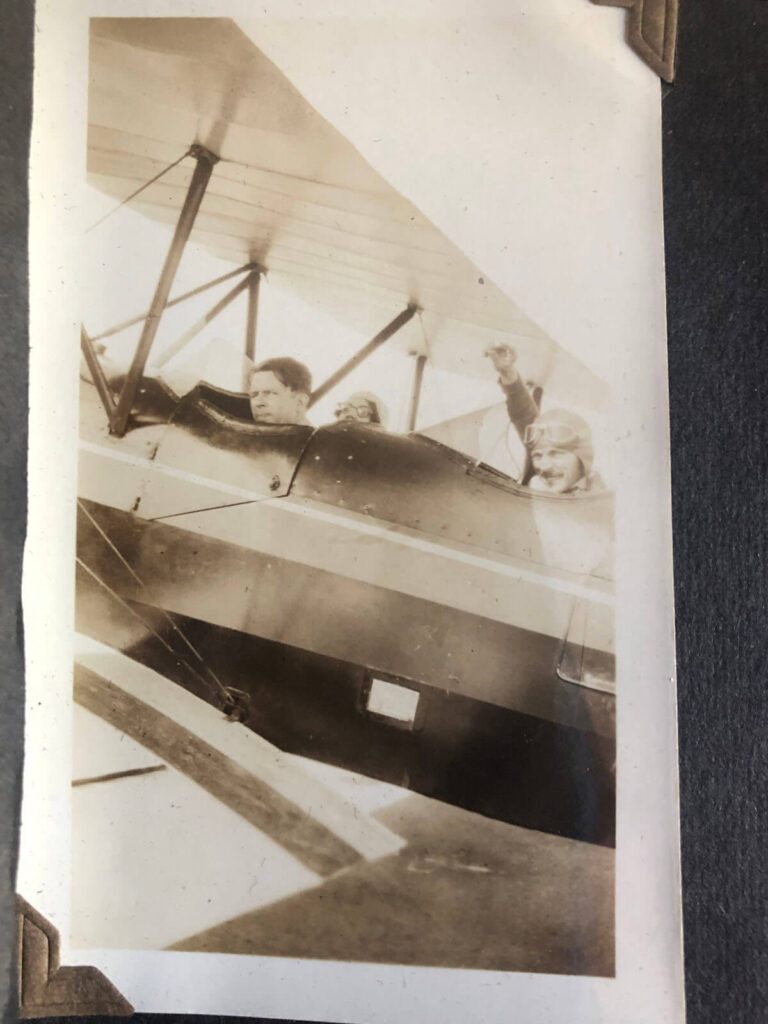
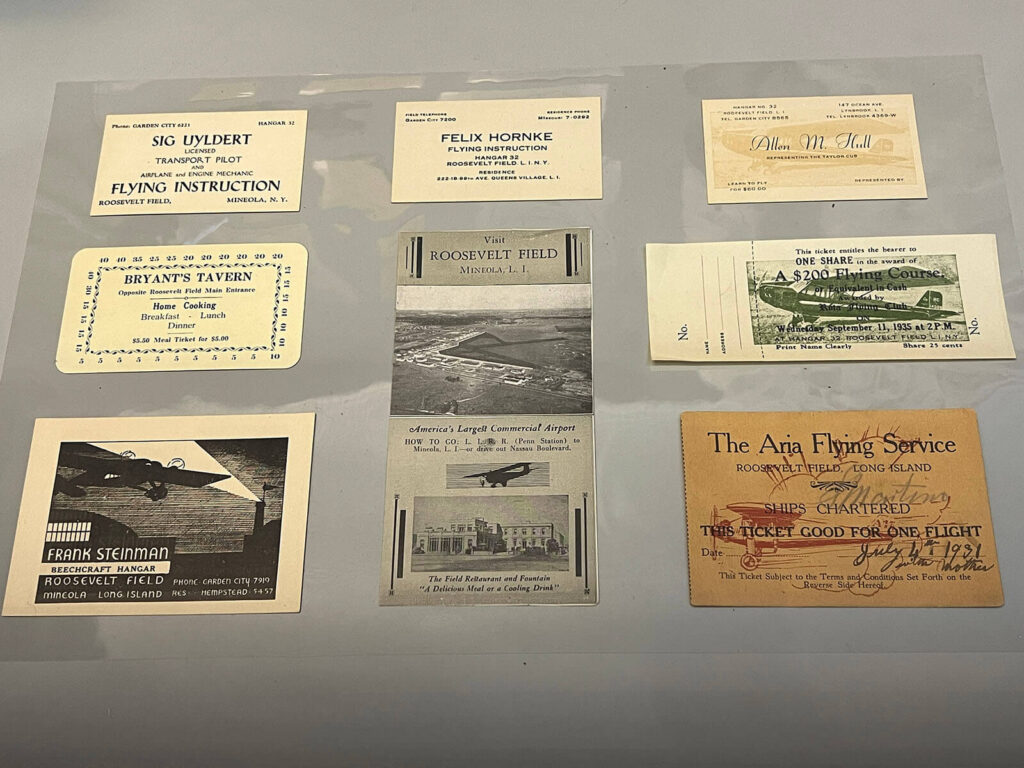
If only I’d known. I spent many happy hours at Aunt Olive’s house as a kid, watching those atomic bomb-creates-monster black-and-white movies in her living room. She lived not far from where that airfield once was. A visit to the Cradle of Aviation Museum on Long Island confirmed my grandfather’s pilot was a flight instructor at Roosevelt Field.
Grandfather had written his name under the photo, and Felix Hornke’s business card was part of an exhibit. I’ve promised the museum scans from this family photo album to add to their archives.
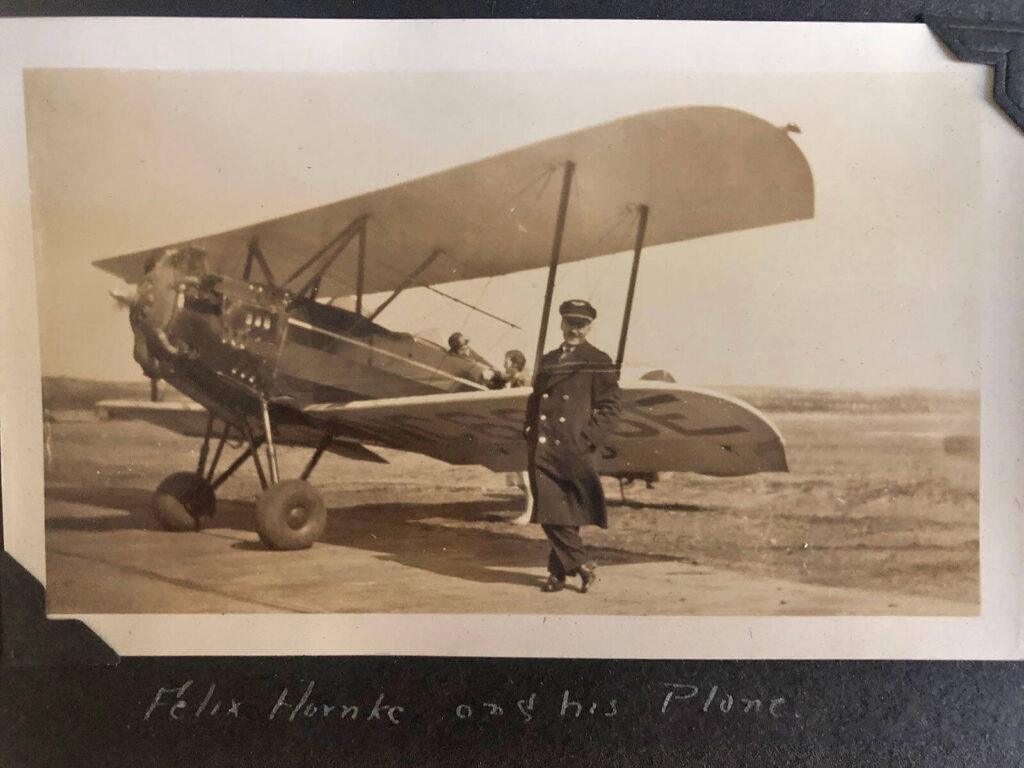
Cracking open that album cracked open a new world of interest for me in aviation. I’ve consumed stacks of books on early aviation since. This May, we made it to Dayton, helping with a better understanding of the Wright Brothers and of military aviation. Spending two full days at the National Museum of the United States Air Force, we still only took in half of it.
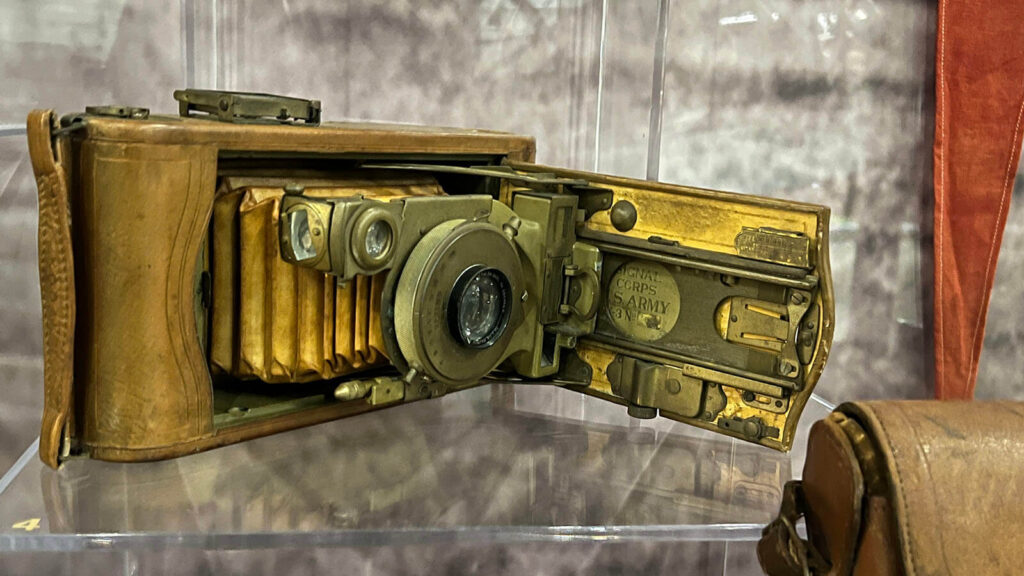
Last summer’s trip led us to a series of aviation museums spanning from Georgia to New York. While in the Hudson Valley for me to seek more details on both sides of my family, we headed to Old Rhinebeck Aerodrome for their Saturday airshow.
Home to America’s top collection of vintage flight-worthy planes, it began with the acquisition of aircraft left in hangars at Roosevelt Field when the entire airfield was about to be razed for a shopping mall, just a few years after my grandfather’s death.
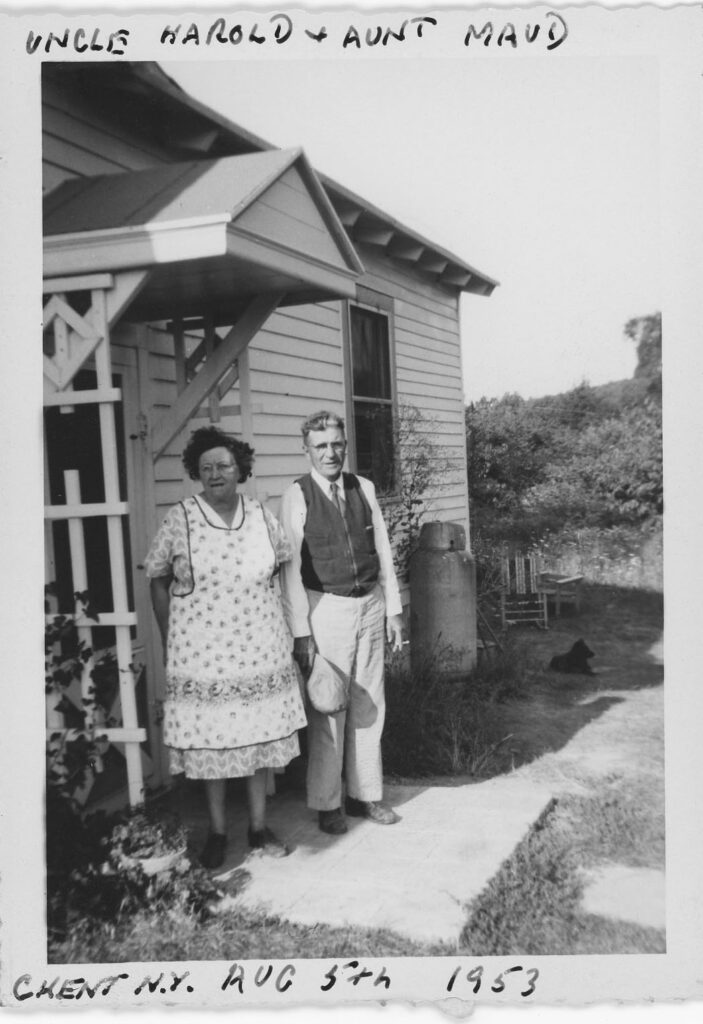
As serendipity would have it, it was their World War I weekend and there was a Signal Corps tent, for they were the Army branch of that era overseeing aviation. When I was a tot, Dad would drive us up towards Albany to visit Uncle Harold. Digging into Harold’s past, I discovered he had a unique call sign as a ham operator because he’d been trained in radio by the Signal Corps during World War I.
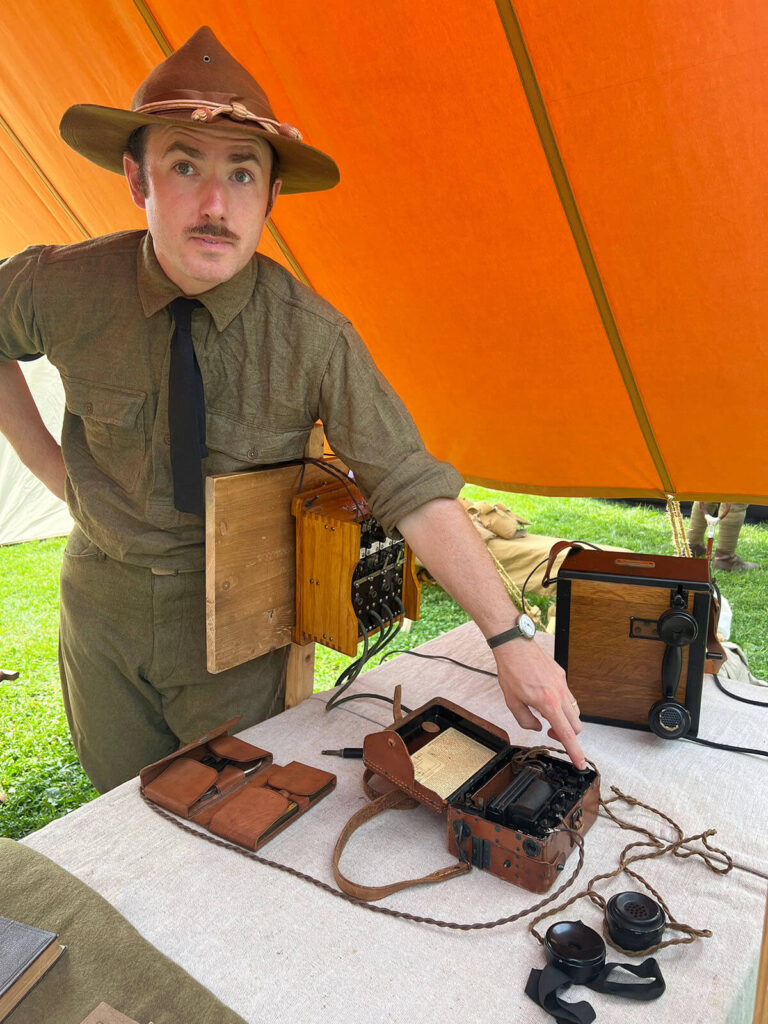
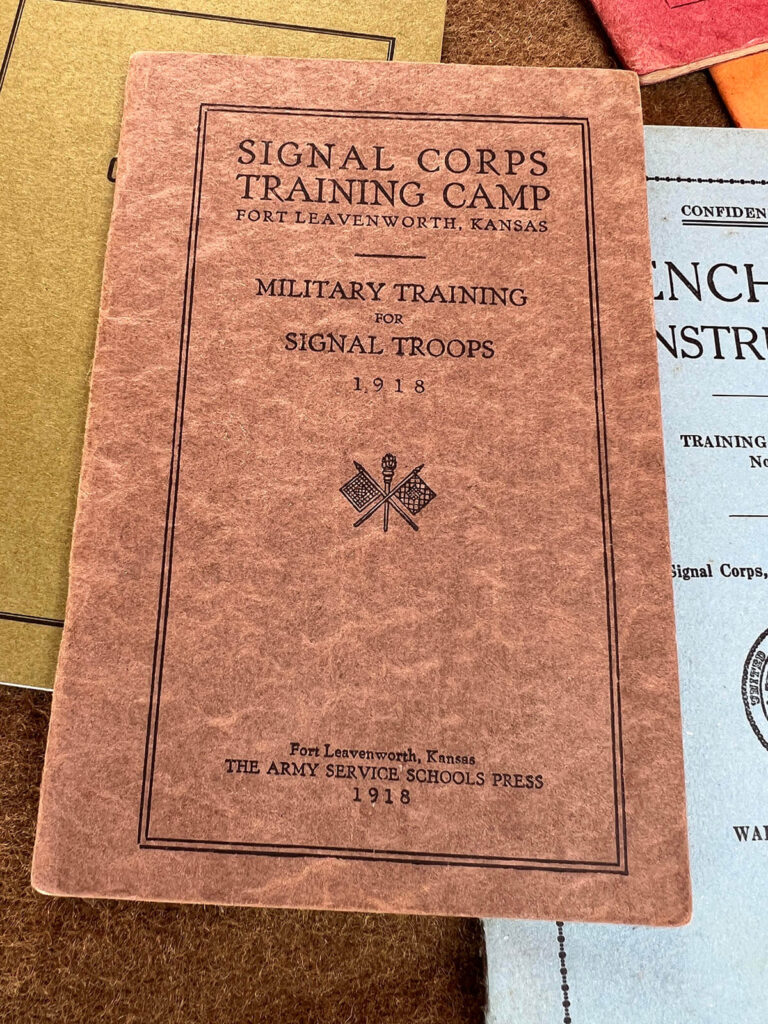
Unlike my mother’s grandfather who lived on the other side of the Hudson River, Uncle Harold hadn’t been shipped to Europe. Instead, he spent the war in a communications role at West Point. The day after taking in the vintage airshow, we tracked down my uncle’s (great-great uncle, to be precise) hometown.
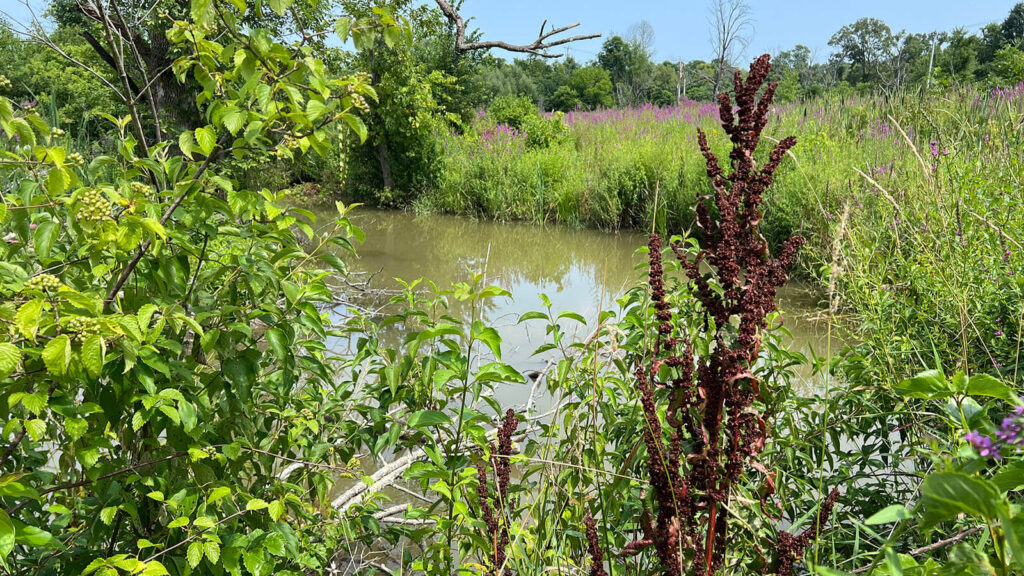
We found a creek I remembered walking along with my father and spotted the house I recalled as Uncle Harold’s: I remembered its shape and the high hill it was on above the creek. He’d had a tall radio antenna, something that stuck in my young mind, and a radio room behind a door off the dining room.
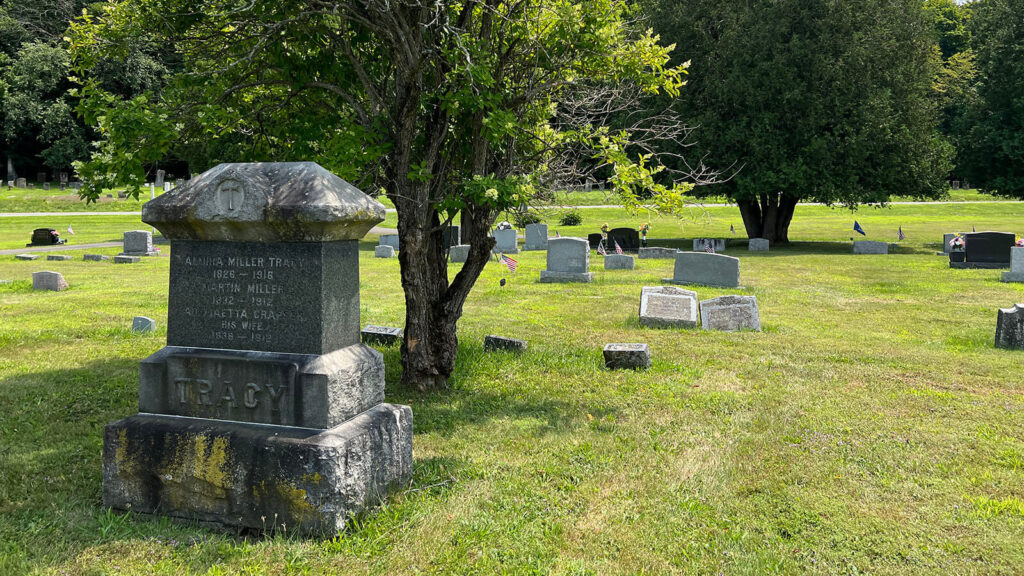
Thanks to Find A Grave, I was able to track down where he was buried. It took John and I the better part of an hour walking that cemetery to find his grave. It was one of the older ones in the newer section. Surprisingly, his wife wasn’t buried with him. More astoundingly to me, his parents were: a confirmation of yet another generation in my past along the Hudson River, my great-great grandparents on my father’s father’s side.
Etched in stone, the name of the generation before that, my great-great-great grandmother’s maiden name as my great-great grandfather’s middle name: Hudson.
One of Dad’s cousins dove into genealogy forty years ago to try and prove the connection to Henry Hudson. I believe she did, through his youngest son, left behind in England with his wife when he and the elder son sailed to Hudson’s Bay and were marooned there by a mutinous crew.
Story. HIS story. Hers, too. Digging into my family’s past just keeps tossing more fascinating tidbits my way. A never-ending springboard of potential stories to research and write. It’s a shame my younger self was too busy in the present to think about the past. If only I’d known more about these family stories before the people who held them had passed. Now that I’ve reached an age where my days no longer have to be consumed by earning a living, family stories have proven themselves a new springboard for fascinating research.
And someday, my life – and yours – will be someone else’s history to research.
